Why are Universal Safety Gloves a Must-have in Every Workplace
In daily work, a pair of good gloves is the “armor” of your hands. Whether it is handling, maintenance, cleaning or light manufacturing operations, general safety gloves are the most commonly used protective tools for front-line workers.
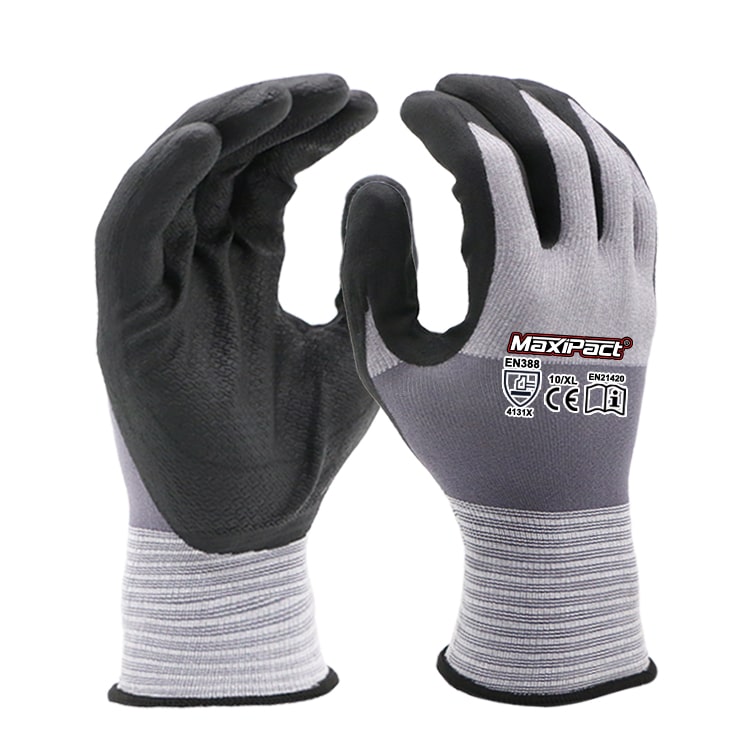
General safety gloves are widely used in manufacturing, logistics, assembly, warehousing and other industries due to their versatility and wide adaptability. High-quality general gloves must not only meet basic protection needs, but also meet professional standards in many aspects of performance.
Abrasion resistance and mechanical protection level
High-quality gloves usually have excellent abrasion resistance and pass the EN 388 standard test, and get ideal scores in abrasion resistance, cut resistance, tear resistance and puncture resistance. This means that the gloves can provide continuous protection in high-frequency operations and effectively extend their service life.
Coating process and grip performance
Gloves with nitrile (Nitrile), polyurethane (PU) or latex (Latex) coating can significantly improve friction in dry, wet or oily environments, ensuring that operators maintain a stable grip when operating tools or equipment and reduce the risk of slipping.
Comfort and breathability
High-end general-purpose gloves are mostly made of 13-gauge or 15-gauge seamless nylon, polyester or HPPE lining, which is both elastic and breathable, effectively relieving hand fatigue caused by long-term wear, and improving wearing compliance and operational flexibility.
Sustainability and compliance certification
With the development of the green manufacturing trend, more and more high-quality general-purpose gloves use low-VOC emission materials and pass environmental certifications such as REACH, RoHS or OEKO-TEX® to meet the dual requirements of sustainability and safety in the global market.
Size standardization and fit design
Multiple size specifications and ergonomic tailoring design ensure that users with different hand shapes can get a good fit. Reasonable fit not only improves operational flexibility, but also helps to improve overall protective performance.
When choosing general safety gloves, understanding the actual working environment is the prerequisite for ensuring the effectiveness of hand protection. Different usage scenarios have clear requirements for the glove material, coating type, lining structure and protection level.
Indoor vs outdoor work
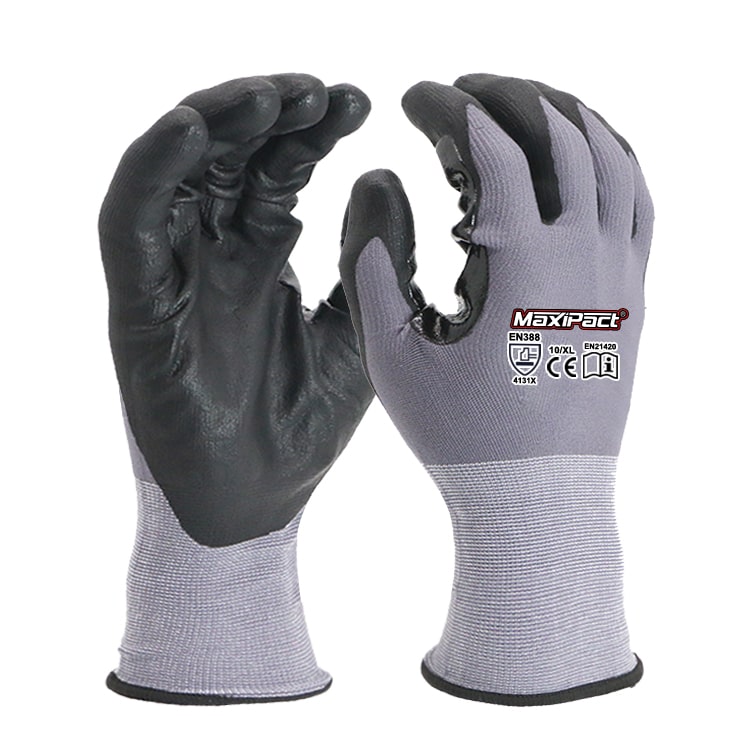
Indoor work usually has a more stable environment with moderate temperature. It is recommended to choose lightweight, breathable nylon or polyester knitted gloves with PU or nitrile coating to provide grip while taking into account comfort.
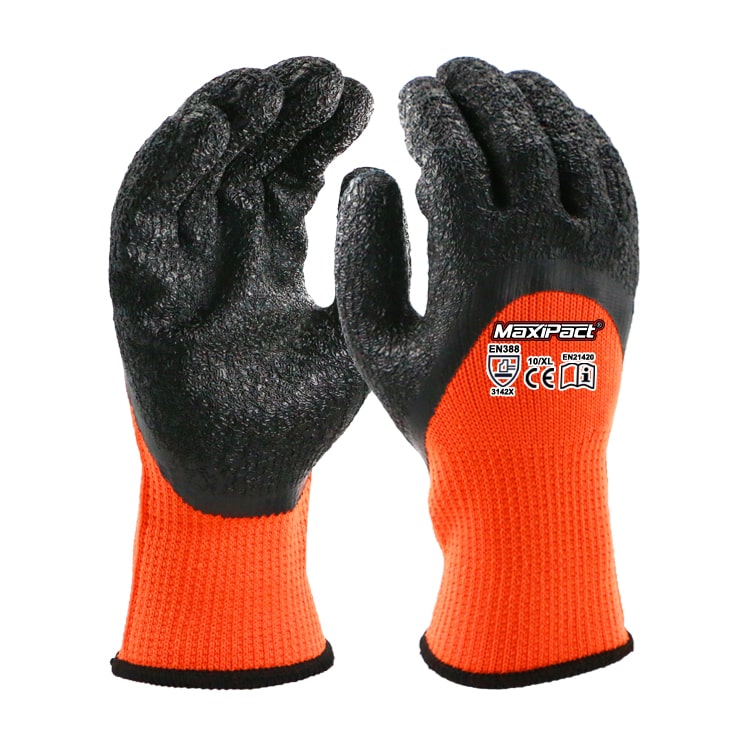
In outdoor environments, workers are more likely to face temperature fluctuations, UV exposure and working on rough surfaces. At this time, it is recommended to use thickened polyester/cotton gloves or non-slip gloves with latex wrinkled coating, which have better wear and tear resistance.
Dry, wet or oily environment
PU coated gloves can be selected for work in dry environment, which are light, sensitive and suitable for precise operation.
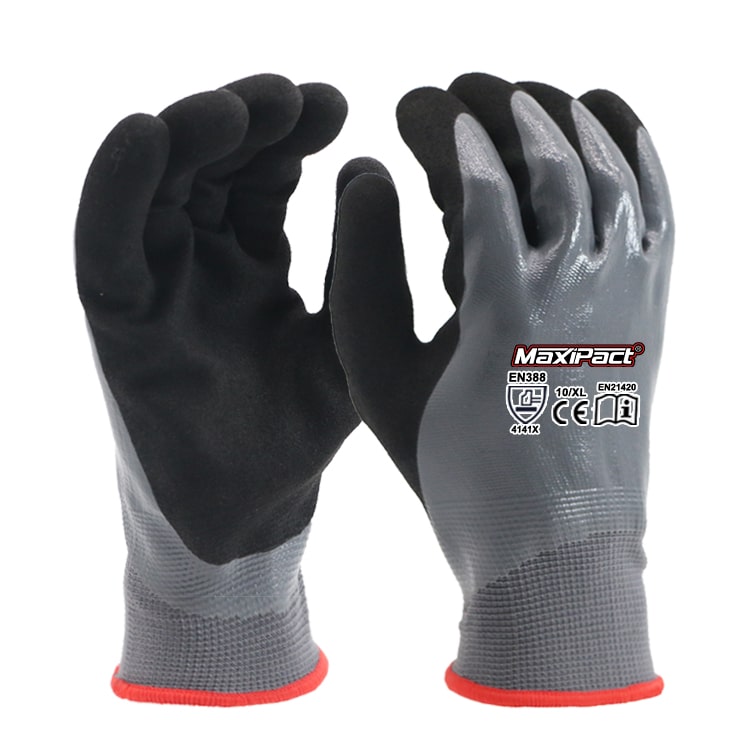
In wet or water-containing working environments, such as cleaning, breeding, and gardening, latex coated gloves can be used, which have excellent grip and certain waterproof properties. For oily or chemical-containing operations, such as mechanical maintenance and metal processing, nitrile coated gloves should be used, especially full-coated or double-layer nitrile foam coated gloves, which provide good oil isolation and corrosion resistance.
Light work vs. heavy work tasks
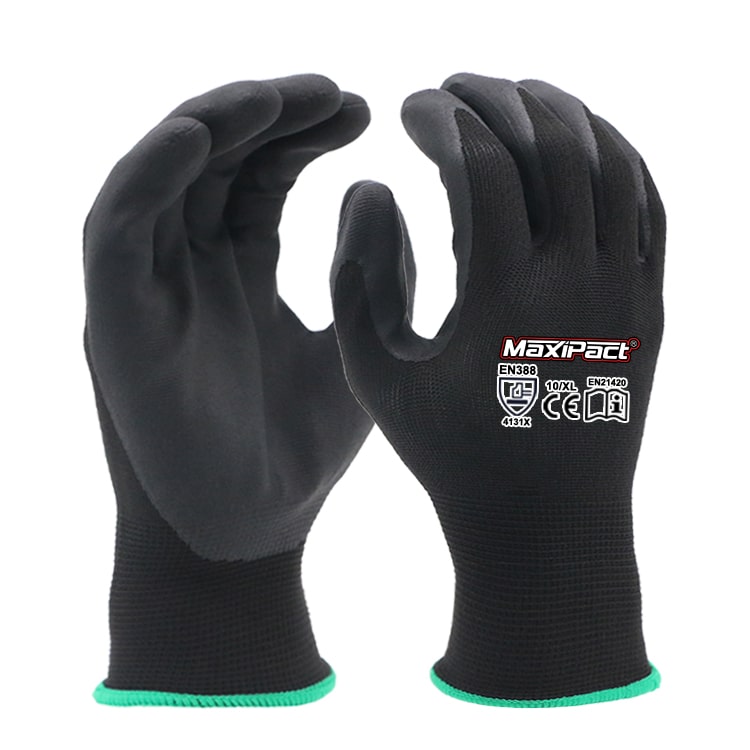
For light work tasks, such as assembly lines, sorting, handling, etc., high-sensitivity, low-coating thickness gloves are preferred, such as 13-gauge PU palm-coated gloves or micro-foam nitrile gloves, which do not affect flexible operation and can provide basic protection.
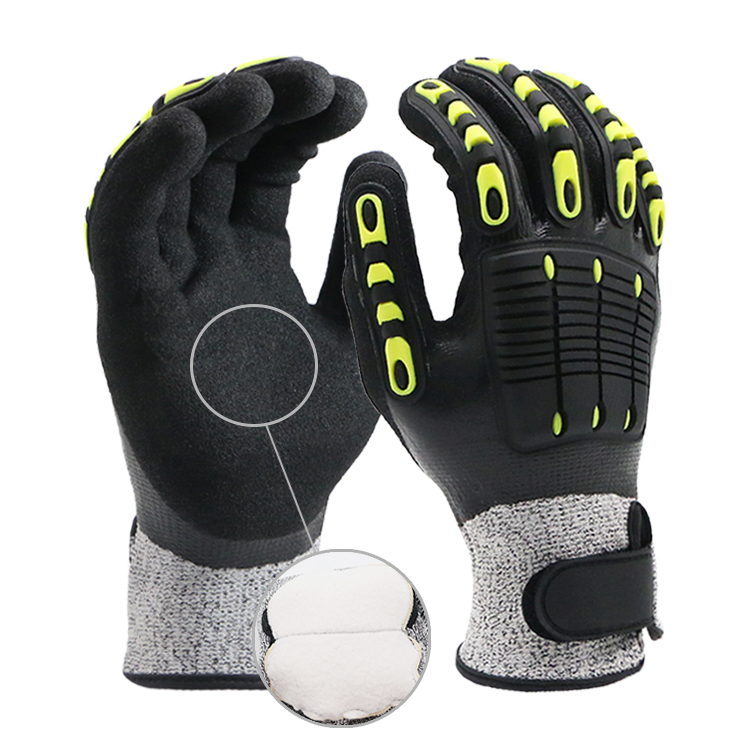
In heavy-load working environments, such as construction, metal processing, carpentry, etc., gloves with a high level of protection are required. It is recommended to use thick knitted lining with heavy-duty coating or reinforced palm design to improve wear resistance, cut resistance and impact cushioning ability.