Anti Collision vs Anti Cutting: An Ideal Choice for Dual Protection with a pair of Gloves
In high-risk industries, workers’ hands are constantly exposed to various risks of injury – from blunt impacts of tools, sharp edges of materials, or both. Traditional work gloves usually focus on a single protection: either cut protection or anti-collision. But in today’s complex working environment, this is far from enough. Therefore, gloves with dual protection functions (both anti-collision and anti-cut) are gradually becoming the new industry standard.
Key design features of anti-collision gloves
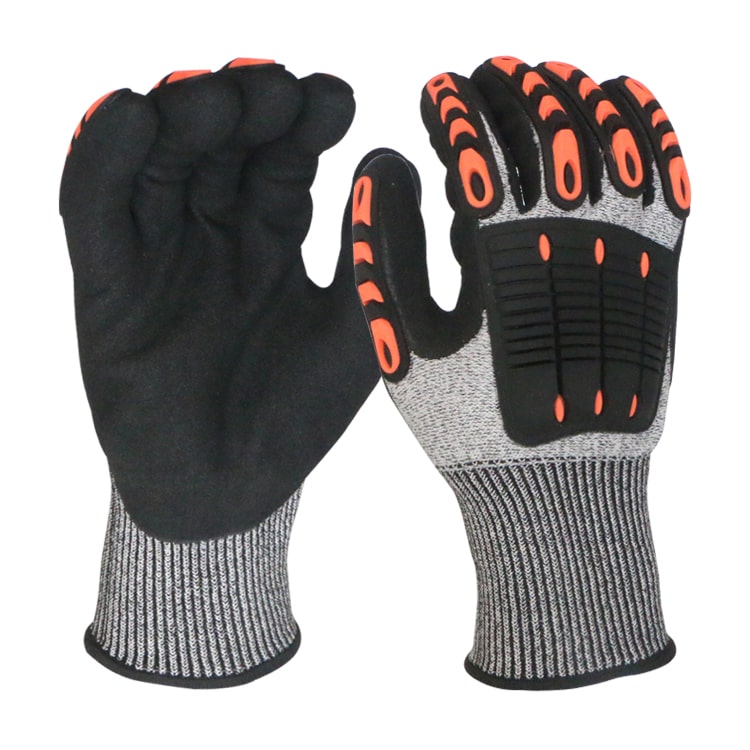
Anti-collision gloves are designed to protect the back of the hand, knuckles and fingers from sudden impact, squeezing or repeated impact. Usually equipped with TPR (thermoplastic rubber) armor structure on the back of the hand area, this three-dimensional, flexible rubber guard is precisely arranged on the joints, fingers and metacarpal bones, providing strong protection while retaining flexibility for easy hand operation.
TPR and other cushioning materials
TPR is the most widely used material in anti-collision gloves. It has excellent energy absorption, flexibility and durability, and does not make the gloves thick or stiff. Some high-end gloves also add EVA foam or gel pads to improve cushioning performance in working conditions with strong vibrations. The structure of TPR can evenly disperse the external impact force to a larger area, thereby reducing local pressure and effectively reducing bruises, fractures or crushing injuries, which is particularly critical in industries such as construction, mining, oil and gas.
The structure of TPR can evenly disperse the external impact force to a larger area, thereby reducing local pressure and effectively reducing bruises, fractures or crushing injuries, which is particularly critical in industries such as construction, mining, oil and gas.
Gloves with a single function can no longer meet the needs of high-risk environments
In real work environments, risks are often multi-layered. A construction worker may be carrying steel pipes one second and cutting metal plates the next. Frequently changing gloves with different functions is not only inefficient, but may even bring new safety hazards. Double protective gloves achieve multi-functionality with one hand, which is both safe and efficient.
Synergy of impact and cutting protection
All-round hand protection: simultaneous protection against cuts from sharp objects and impact extrusion
Reduce replacement frequency: a pair of gloves can handle multiple tasks and improve efficiency
Reduce overall costs: reduce work-related accidents and downtime losses, and save expenses
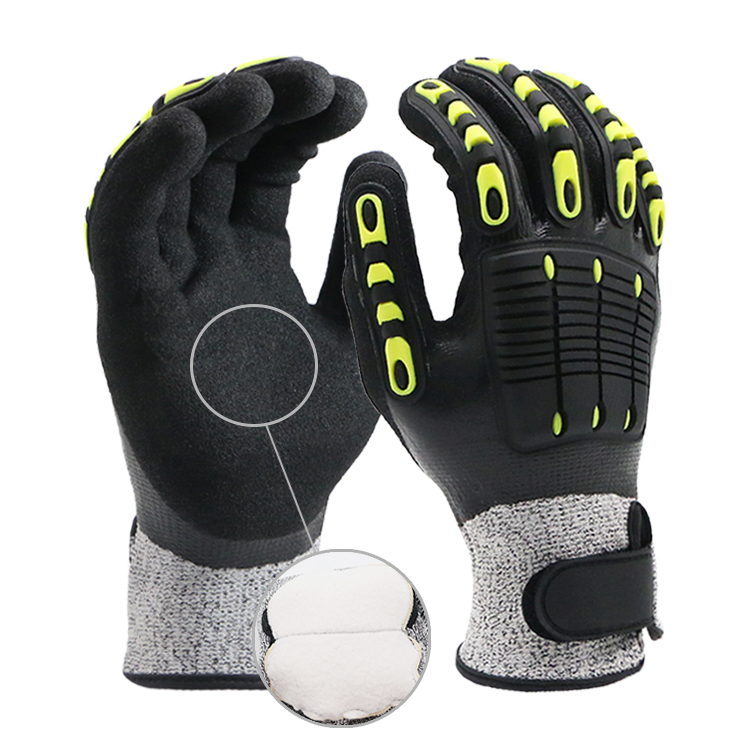
When the anti-impact shell is combined with the anti-cutting lining, a multi-level defense system can be formed. The outer layer resists external impact, and the inner lining prevents sharp objects from penetrating. The combination of the two greatly improves the overall protection effect.
ANSI CUT A5
15G HPPE liner
Complies with EN388 4X43EP
Padded palm more wear-resistant
Nitrile coated palm – anti-slip, oil & water resistance
Excellent grip, waterproof
Adjustable cuffs for a better fit
Key features of double protective gloves
Reinforced knuckle and back of hand armor structure
The TPR module protects the joints and back of the palm from high-intensity impact damage.
High-performance cut-resistant lining
Using HPPE (high-performance polyethylene), Kevlar® or steel blended yarn, it reaches EN 388 or ANSI A5–A9 level, with strong cut resistance.
Ergonomic and flexible design
Modern double-protection gloves are mostly designed with pre-bent finger structure, and TPR is also thinner and softer to ensure flexibility.
Anti-slip and wear-resistant coating
The palm is coated with coarse sand nitrile or foam nitrile to enhance grip and wear resistance in oil, water and dry environments.
Optimized breathability and sweat-wicking performance
Some styles use breathable mesh or moisture-wicking lining to keep hands dry and reduce fatigue.
According to the U.S. Bureau of Labor Statistics (BLS), hand injuries account for more than 23% of all work-related injuries, and most of these injuries can be effectively prevented with appropriate protective gloves.
Construction and demolition operations
There are risks such as falling objects, sharp tool operation, and collision with reinforced concrete
Oil and gas / heavy equipment industry
Involving high-impact operations such as lifting, welding, and mechanical maintenance
Metal processing and glass manufacturing
High-risk scenarios with sharp edges and heavy materials
Logistics and warehousing and handling
Frequent contact with sharp and hard objects in box handling, shelf operation, and loading and unloading machinery
Common misunderstandings about double protective gloves
“The more protection, the less comfortable”?
New materials and ergonomic design have achieved both safety and comfort.
“Double protective gloves are too thick and heavy”?
Modern TPR is thinner and lighter, and the glove structure is more fitted.
“As long as it is a cut-resistant glove, it can be collision-proof”?
Cut-resistant ≠ collision-resistant, the materials and structures required for the two are completely different.
MAXGLOVE Customization and OEM Services
MAXGLOVE provides OEM and customization solutions for global distributors, brands and industrial customers.
Supports customized LOGO and exclusive packaging design
Styles and specifications can be tailored according to industry needs
Flexible MOQ, suitable for trial orders and large-scale purchases
We have strong R&D and production capabilities to help you create exclusive safety gloves solutions suitable for the local market. Welcome to contact us for samples, quotes or exclusive customization service solutions.
WhatsApp: +86 13026506303
Email: marketing@maxipact.com