The Industrial Work Glove Bible: How to Choose MAXGLOVE for Extreme Protection
Your hands build skyscrapers, assemble engines, and forge steel—yet one wrong glove choice could end it all. With over 1 million hand injuries occurring annually in industrial workplaces (OSHA), the right protection isn’t optional—it’s survival. Forget generic “safety gloves.” At MAX GLOVE, we engineer armor for you.
When Gloves Become Lifelines: Industries on the Frontline
In automotive plants, sheet metal slices through weak coatings like paper. Welding bays shower sparks hotter than 500°C. Chemical handlers battle solvents that dissolve substandard materials in minutes. And in frozen warehouses (-30°C), stiff gloves become dexterity traps. Each industry has a silent enemy:
– Metal fabrication: Razor-edged debris + oil = grip failure.
– Oil/gas: Crush risks + hydrocarbon exposure.
– Logistics: Cardboard abrasion wears palms thin in weeks.
A glove that conquers oil slips on ice. One resisting heat melts in acid. Compromise gets hands stitched.
Extreme Threats Demand Specialized Shields
MAX GLOVE engineers gloves like scalpels—precisely honed for specific battles:
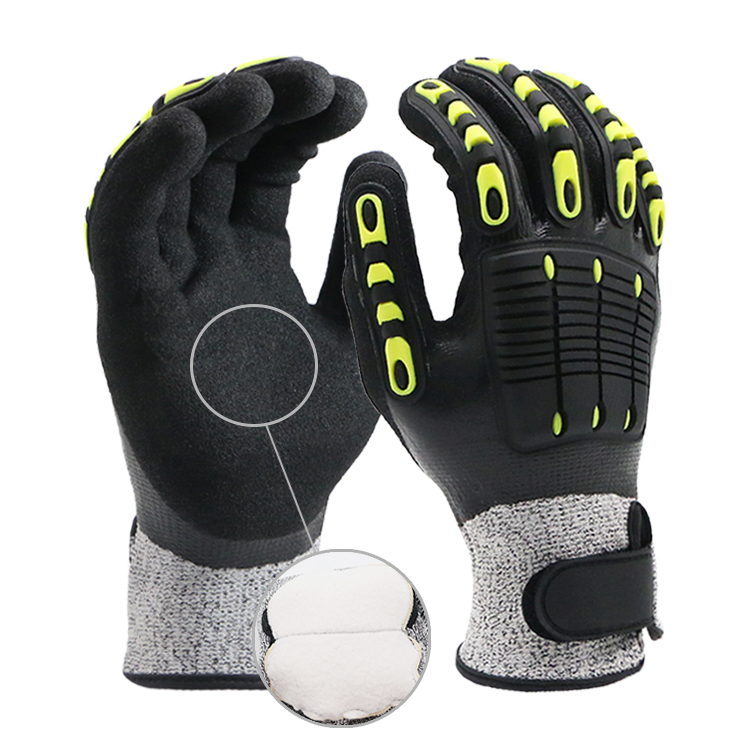
Thermoplastic rubber (TPR) knuckle guards absorb 70% of impact force (tested to EN 13594), turning wrench slips from fractures to flickers.
Engineered with 13-gauge HPPE liners + ANSI A7 cut resistance, it laughs at angle grinder sparks. Sandy palms maintain an oil-defying friction coefficient of 1.25—even submerged in gear lubricant.
The 5 Non-Negotiables for Choosing Industrial Gloves
Grip That Defies Physics: Standard coating gloves slips at 0.8 friction in oil. MAX GLOVE micro-ribbed palms achieve >1.2 coefficient—proven in auto plants handling greasy engine blocks.
Mobility or Mortality: Thick gloves cause fatigue-related accidents (OSHA: 23% spike). Our 0.8mm precision-coated models let assemblers thread 2mm bolts blindfolded.
Breathe or Bleed: Non-breathable PVC traps heat, slashing productivity. MAXGLOVE 13-gauge lining wicks sweat during 12-hour shifts.
Matching Gloves to Your War Zone
– Construction/Steel Handling: TPR knuckles + ANSI A7 defense.
– Chemical Tanks: Our 0.4mm NitroFlex™ laminate resists benzene permeation for >40 minutes (EN 374 Type B certified).
– Electrical Hazards: ATPV 25 cal/cm² MAXGLOVE gloves block arc flashes.
Fatal Glove Selection Blunders
“Thick Is Safe” Fallacy: 2mm+ coatings cripple dexterity. A dropped I-beam crushes faster than thin gloves tear.
Chemical Complacency: “Splash-resistant” gloves fail in 90 seconds when immersed. Demand EN 374 Type B/C certification with permeation times.
One-Glove Armies: Using winter gloves near welding sparks melts insulation onto skin. Match the enemy.
When a German shipyard reported glove failures every 19 days handling steel plates, we rebuilt protection atom-by-atom:
– Base: Tear-resistant 15-gauge polyester—survives snags on rebar.
– Bond: Proprietary adhesive—prevents peeling after 50,000+ flexes (ASTM D3389).
– Shield: Oil-locked PU with laser-etched diamonds—1.28 friction in hydraulic fluid.
6,200 fewer glove replacements monthly across 12 shipyards. In -30°C meat lockers, MAXGLOVE bends 300+ times without cracking. Welders report MAXGLOVE enduring 22,000 spark strikes—no charring.
Your Hands Don’t Get Second Chances
Industrial gloves aren’t PPE—they’re your last stand between paycheck and permanent disability. MAXGLOVE merges aerospace-grade innovation with battlefield validation. We don’t just meet standards; we vaporize them.
“After losing two fingertips to split gloves, I switched to MAXGLOVE. Two years later? Zero injuries—just calluses and paychecks.”
Ready to armor your livelihood? Explore MAXGLOVE—where every stitch, fiber, and molecule defends the hands building tomorrow.