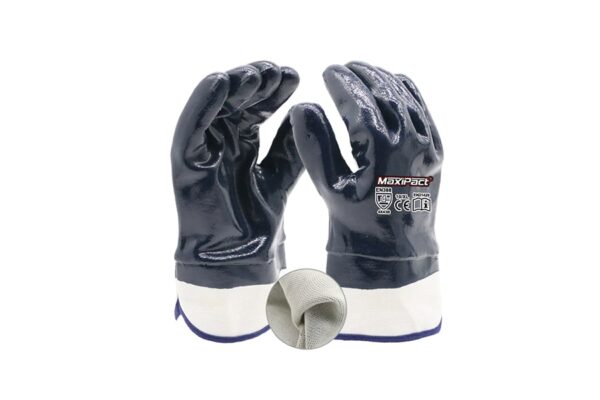
Why are oil-resistant gloves the first choice for the oil and gas industry?
In the cutting-edge oil and gas industry, every day’s work is fraught with challenges. Hand injuries account for 25%-30% of industrial accidents, and over 40% of these injuries are directly related to grip failure. Workers are constantly exposed to oil, grease, and various chemical solvents while simultaneously operating heavy tools and machinery with precision.
Under these conditions, a reliable pair of oil-resistant gloves is far more than just an ordinary accessory, it is the first line of defense for safety and maintaining production efficiency. It is not only a basic barrier preventing direct contact with harmful substances but also crucial equipment for ensuring a stable grip in slippery environments and preventing accidents.
Understanding the true meaning of “oil resistance” is fundamental to choosing the right gloves. Oil resistance is not simply about not getting oily, it is a professional concept closely related to personal protective equipment standards.
For example, gloves meeting Level 5 or 6 standards retain their physical properties after a 72-hour immersion test, with a weight change of no more than 60%. True industrial-grade oil-resistant gloves effectively prevent oil penetration; some even actively repel oil droplets, keeping the surface dry and preventing them from becoming heavy and slippery due to oil absorption. This is the fundamental difference between professional protective gloves and ordinary gloves.
Among many materials, nitrile rubber is widely recognized as the gold standard for oil-resistant protection.
Nitrile rubber offers 3-5 times better protection against petroleum-based oils, greases, and various chemicals than natural latex, and its abrasion resistance is 2-3 times that of latex. This synthetic rubber material has natural resistance to petroleum-based oils, greases, and various chemicals, effectively preventing penetration and material degradation. Simultaneously, nitrile rubber offers superior physical properties—excellent puncture resistance, tear resistance, and abrasion resistance—combined with reliable grip even in oily environments, making it the material of choice for the oil and gas industry.
Selecting the right oil-resistant gloves for different work processes requires professional consideration.
Upstream exploration drilling requires handling raw crude oil and drilling mud, where fully coated nitrile gloves with a thickness of 0.5mm or more provide the best comprehensive protection.
Midstream pipeline and storage tank operations prioritize a balance between slip resistance and flexibility; data shows that using appropriate gloves can reduce slippage accidents by 35%.
Downstream refining operations, facing highly corrosive chemicals and high-temperature risks, specially certified chemical protective gloves are essential; for delicate maintenance and inspection work, lightweight and flexible nitrile coated gloves with a thickness of only 0.3mm provide the necessary feel and flexibility while ensuring basic protection.
The design philosophy of modern oil-resistant gloves has transcended mere protection, prioritizing ergonomic comfort.
20-400 Oil Proof Gloves with breathable linings can reduce hand discomfort by 45%, while ergonomic designs can reduce muscle fatigue by 30%. Through breathable linings, pre-flexed finger designs, and cuts that conform to the hand’s contours, the new generation of gloves significantly improves the wearing experience. These improvements not only reduce muscle fatigue from prolonged use but also increase work motivation—because only protective gear that one is willing to wear consistently can truly provide protection.
Proven in practice, the right protective gear can make a significant difference. A large North American oil refinery, after adopting nitrile-coated gloves that meet ANSI Level 4 cut protection standards, saw a 52% decrease in hand injuries and a 38% reduction in tool drop accidents within six months.
Feedback from offshore drilling platform workers confirms that these gloves, while maintaining grip strength, ensure hand safety during extended work periods due to their oil resistance. Lessons learned from personal protective equipment (PPE) audits demonstrate that the benefits of investing in professional-grade PPE far outweigh the potential losses from accidents—every $1 invested in appropriate PPE can prevent $4-7 in potential accident costs.
Ultimately, oil-resistant gloves are irreplaceable for oil and gas workers. They allow workers to face every task with confidence, control, and safety. When hands are reliably protected, both productivity and safety levels improve simultaneously.
When choosing a safety glove manufacturer, reliable experience is crucial. MaxGlove, with 13 years of professional manufacturing experience and providing protective solutions for over 50 oilfield projects worldwide, is committed to providing reliable protective solutions for all kinds of extreme working conditions. Our gloves are ISO 9001 quality management system certified, and key products meet ANSI/ISEA Level 4-6 protection standards. Let’s work together to safeguard the safety of every frontline worker.