Why High-Performance Cut-Resistant Gloves Are Widely Embraced in the Metal Industry
If you work in the metal industry, you know that hands are your most valuable tools. Protecting them isn’t just a safety requirement—it’s a necessity for sustaining your skills and livelihood. This is why high-performance cut-resistant gloves have become a common sight in metal shops and factories. They offer a critical blend of protection and functionality that meets the unique demands of this challenging field.
The Unavoidable Risks in Metalwork
The metal industry presents a high-risk environment for hand injuries. Every day, workers handle sharp metal edges, operate machinery that requires force and repetition, and deal with materials that can cause serious harm.
Consider these industry insights: one out of three new metalworkers sustains an injury within their first three months on the job. Furthermore, injuries from repetitive motions, like those common in welding or machining, account for approximately 28% of all serious work-related injuries and illnesses in private industry. These aren’t just minor nicks and cuts; they are incidents that can lead to lost workdays, long-term health issues, and significant costs for businesses.
More Than Just Basic Protection: How Cut-Resistant Gloves Work
Standard work gloves aren’t enough to defend against the sharp edges and tools found in metalworking. High-performance cut-resistant gloves, like those from MaxGlove, are engineered with advanced materials and technology to provide superior defense.
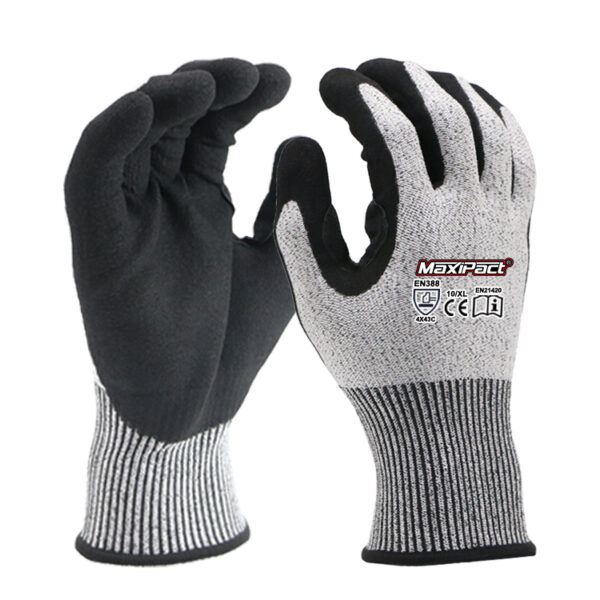
40-274 Cut-resistant gloves are made of high-strength fibers and can withstand contact with sharp metal edges. They meet EN388 Level 5 and are suitable for handling sharp metal parts, glass, or blades.
The key advancement is that the 40-274 no longer comes at the expense of flexibility. Unlike the bulky protective gloves of the past, modern cut-resistant gloves use microfiber to keep them soft and flexible. This allows workers to maintain a precise grip and perform delicate tasks without removing their primary protective gear.
Tangible Benefits Driving Adoption
The widespread use of these gloves is driven by clear, practical benefits that impact both worker safety and business operations.
Reduced Injury Rates and Costs: The most immediate benefit is a decrease in the frequency and severity of hand lacerations. This directly translates to lower costs associated with medical treatment, injury claims, and lost productivity. For a business, investing in quality gloves is a proactive measure that safeguards its workforce and its bottom line.
Enhanced Productivity through Comfort and Grip: Metal working tasks often require prolonged, precise work. Gloves that are breathable and flexible reduce hand fatigue, allowing workers to stay comfortable and focused for longer. Furthermore, many cut-resistant gloves feature coatings like nitrile or polyurethane (PU) on the palms. These coatings significantly improve grip, helping workers handle metal parts, tools, and machinery more securely and efficiently.
Durability for Long-Term Value: While the initial price of a high-performance glove may be higher, its extended service life often makes it more economical over time. These gloves are designed to resist abrasion and wear from constant contact with metal, meaning they don’t need to be replaced as often as standard gloves. This durability offers businesses a better return on investment.
In an industry where skilled workers are the backbone, protecting their hands is a direct investment in productivity, quality, and their long-term well-being. High-performance cut-resistant gloves have become a popular and essential piece of personal protective equipment because they offer a reliable, practical, and smart solution to the ever-present dangers of metalworking.