How Heat Resistant Gloves Improve Safety in Welding and Metal Handling
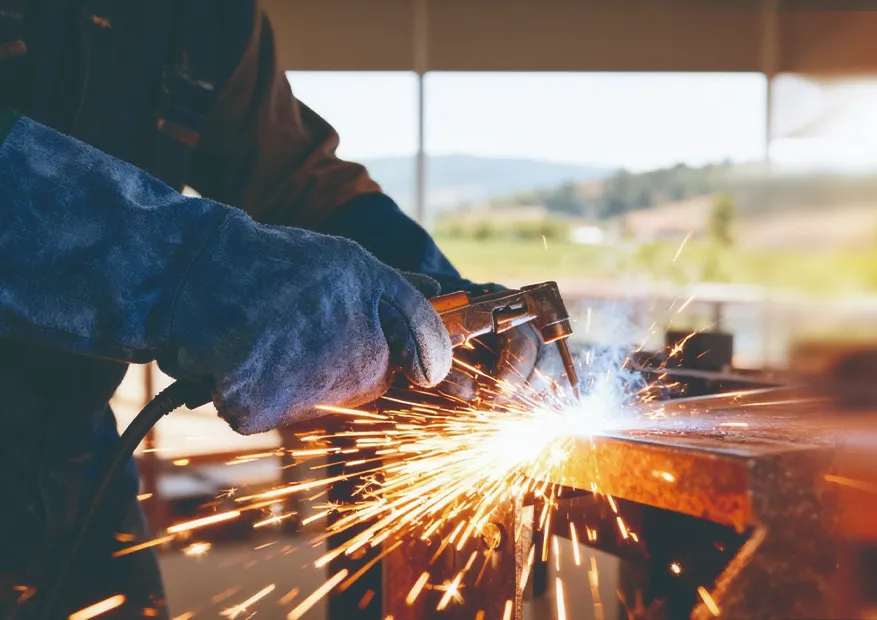
As the safety manager of a medium-sized metal fabrication plant, I once dealt with a burn accident that remains vivid in my memory. A skilled welder accidentally brushed the back of his hand against a metal plate that had just been cut and looked “just a bit dark.” The momentary contact resulted in a second-degree burn, sidelining him for two weeks. The investigation revealed he was wearing standard cowhide gloves, utterly inadequate against the plate’s residual heat of over 500°C. This incident drove home the understanding that in welding, foundry work, and hot metal handling, “heat resistance” is not a vague idea but a specific, graded risk that must be precisely defined and guarded against. A pair of professional heat-resistant gloves is the indispensable barrier separating workers from dangerous thermal energy.
Understanding the Thermal Threat: Beyond Open Flames
Selecting effective heat-resistant gloves starts with understanding the three primary forms of heat hazard, each corresponding to different test standards and protective focuses of the gloves:
Contact Heat Protection: This refers to protection against direct hand contact with hot surfaces (e.g., hot molds, metal parts). The key metric is the time it takes for the inner lining temperature to rise no more than a set threshold while in contact with a specific high temperature. Standards like ISO 21420 outline tests evaluating how quickly heat transfers through the material.
Convective Heat Protection: This applies to exposure to hot air, steam, or flame jets. It requires the glove’s outer material to have excellent flame retardancy and resistance to melting and dripping, forming a protective char layer instead of igniting or shrinking upon brief flame contact.
Radiant Heat Protection: Prevalent in welding and furnace work, this is heat transfer via electromagnetic waves. Defending against radiant heat requires glove materials with high reflectivity or low thermal conductivity to reflect or block infrared radiation, preventing heat buildup.
Decoding the Authority Standard: The European EN 407:2020 standard is the authoritative specification for protective gloves against thermal risks. It assigns a performance level (1-4) for six independent properties: flammability, contact heat, convective heat, radiant heat, molten metal splash resistance, and molten metal penetration resistance. For instance, a glove marked “EN 407: X-3-2-2-X-X” achieves level 3 in contact heat (resisting up to 200°C) and level 2 in convective heat. Understanding this code is the first step to precise selection.
Expert Insight: As remarked by a materials engineer with over two decades of experience in PPE: “In high-temperature environments, a glove’s performance is capped by its weakest link. A glove knitted only from aramid may resist sparks well, but heat will transfer quickly if directly gripping a 300°C metal part. Material combinations must be matched to the most severe type of thermal hazard present.”
Selection & Usage Guide: From Standard to Practice
Based on the above knowledge, selecting heat-resistant gloves for welding and metal handling should follow this systematic process:
Hazard Identification & Classification: Clearly define the primary thermal hazard type (is it molten aluminum splash? Or sustained contact with 300°C castings?) and its maximum potential temperature. Refer to the EN 407 standard’s level descriptions for different hazards to determine the minimum required performance level.
Matching Material & Construction:
Heavy Welding/Foundry Work: Prioritize combination gloves with a flame-retardant leather outer shell (e.g., cowhide) and an inner lining of aramid or fiberglass insulation. Leather provides contact heat protection and mechanical durability, while the insulation blocks heat transfer.
Hot Part Handling/Front-of-Furnace Work: Consider aramid knitted gloves or composite gloves with an aluminized reflective layer to address sustained radiant and convective heat.
Involving Molten Metal Splash: Must select specialized gloves with high performance levels in Molten Metal Splash Resistance (5th digit) and Molten Metal Penetration Resistance (6th digit) per EN 407, typically made from specially treated leather or heavy composite materials.
Proper Use & Lifespan Management:
Pre-Use Inspection: Visually and tactilely inspect gloves before each use for any burns, holes, charring, stiffness, brittleness, or significant thinning of the outer layer. Check the integrity of the inner liner.
Understand the Limits: Recognize that glove performance ratings are designed for brief or intermittent contact, not for prolonged immersion in a heat source. Guidelines from bodies like the National Fire Protection Association (NFPA) emphasize that exposure beyond the material’s design limits leads to protection failure.
Establish a Replacement Protocol: Heat-resistant gloves are consumables. They must be replaced immediately upon showing any signs of damage mentioned above or if heat transfer during normal use becomes noticeably faster. Never risk wearing gloves that are “visually intact but functionally compromised.”
Conclusion: On the production front lines where sparks fly and heat radiates, a pair of scientifically designed and correctly chosen heat-resistant gloves is the key tool for transforming invisible thermal threats into managed risks. Through precisely graded materials technology, they silently safeguard workers’ hands, ensuring the continuity and safety of production processes. This is the reliable defense that professional brands like MaxGlove are committed to building for high-temperature workers.