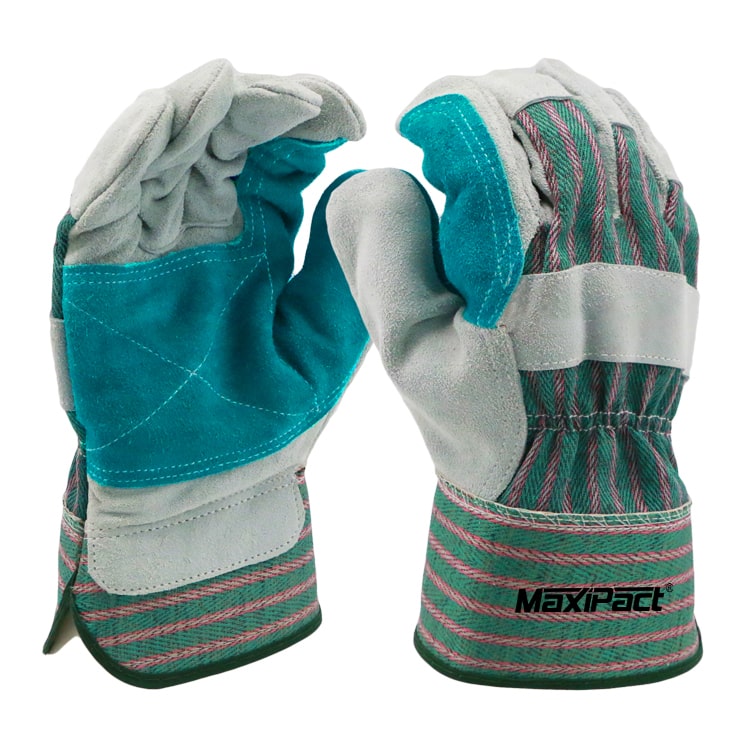
Cow Leather Reinforced Gloves
80-300 GREEN


FEATURES

Grip

Anti Wear
APPLICATION

Metal

Construction

Landscape

Lumber
-
Palm Material: Select split cowhide leather
-
Back Material: Canvas
-
Size: 9-12 Inch
-
Package: 12 Pairs/Polybag
-
Different Color Available
-
Cuffs completely cover the wrist, preventing splashes, debris or other materials from getting inside.
-
Split cowhide has good abrasion resistance, durability and puncture resistance, providing reliable protection.
-
Thickened cowhide resists mechanical friction and wear, providing reliable protection for hands.
-
Although it is made of two layers of cowhide, the leather is soft and comfortable, providing a good feel when worn.
Follow us on Facebook
A: What is the normal service life of gloves?
Q: Depends on usage environment and frequency. Disposable: single-use only. Regular work gloves: replace every 3-6 months. High-grade gloves (e.g., cut-resistant): ~1-3 months under daily heavy use. Final replacement timing depends on actual wear condition.
A: How should gloves be properly stored?
Q: Store in a cool, dry, ventilated place, away from direct sunlight and heat sources (e.g., radiators); keep away from ozone sources (e.g., motors, high-voltage equipment); avoid mixing with corrosive chemicals; hang or lay flat to prevent deformation; periodically check stock condition.
A: Which job types are best suited for leather gloves?
Q: Leather gloves are particularly suitable for: ① Welding & foundry (heat-resistant, spark-resistant); ② Construction & demolition (abrasion-resistant, puncture-resistant); ③ Glass & metal fabrication (cut-resistant, abrasion protection); ④ Fire & rescue (durable, heat-resistant); ⑤ Driving & transport (comfortable, vibration-damping). For wet or oily environments, choose oil-tanned pigskin gloves; for precision work, opt for thin goatskin gloves.
A: What are the advantages of leather gloves over coated gloves?
Q: Leather offers better breathability and moisture-wicking due to its natural material, reducing stuffiness during prolonged wear. Leather also provides stable grip in both dry and slightly damp conditions, with superior heat resistance over most coated gloves (cowhide can briefly withstand 200-300°C contact heat), suitable for welding and foundry work. However, leather gloves are typically more expensive than coated alternatives at similar protection levels.