Split Leather Heavy Duty Work Gloves
80-200 PURPLE

FEATURES

Grip

Anti Wear
APPLICATION

Metal

Construction

Landscape

Lumber
-
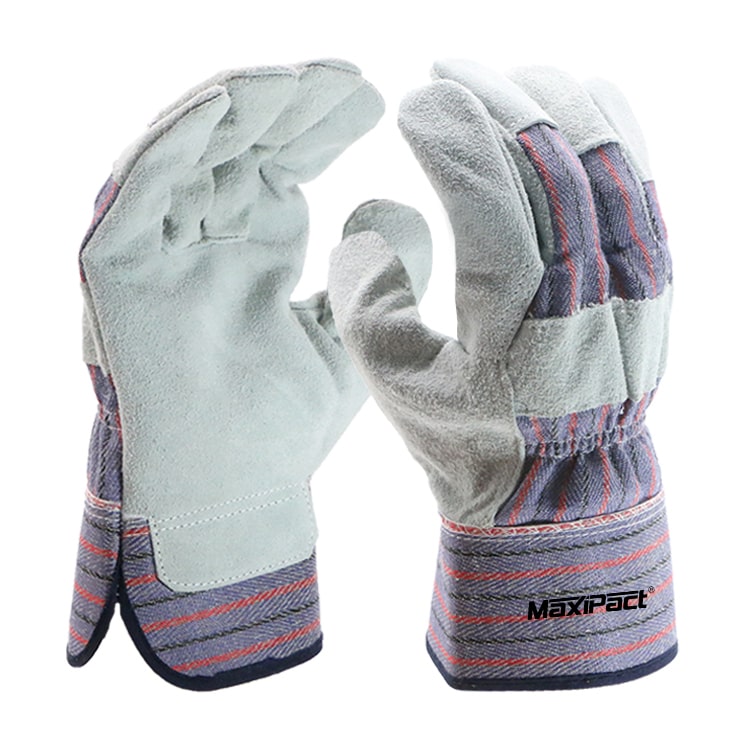
Select split cowhide leather
-
Gunn cut style with cotton dill back
-
Size: 9-12 Inch
-
Package: 12 Pairs/Polybag
-
Different Color Available
-
Cuffs completely cover the wrist, preventing splashes, debris or other materials from getting inside.
-
Split cowhide has good abrasion resistance, durability and puncture resistance, providing reliable protection.
-
Split leather is soft and comfortable, fits the curve of the hand, and provides a good wearing experience.
-
The sturdy material of cowhide prevents irritation and damage to the hands from sharp objects and rough surfaces.
-
Although it is made of two layers of cowhide, the leather is soft and comfortable, providing a good feel when worn.
Follow us on Facebook
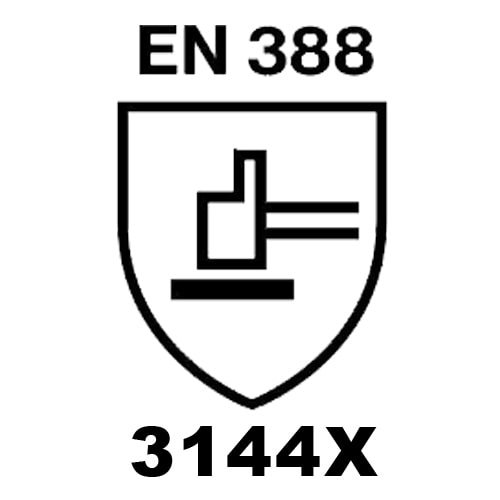
A: What’s the difference between EN 388:2016 and the older EN 388:2003?
Q: The 2016 edition added the 5th digit letter grade (A-F), using the TDM test specifically for high-performance cut-resistant materials. The old version had only 4 numeric digits. The new version more accurately reflects high-level cut protection — A9 gloves receive E/F ratings under this standard.
A: How should gloves be properly stored?
Q: Store in a cool, dry, ventilated place, away from direct sunlight and heat sources (e.g., radiators); keep away from ozone sources (e.g., motors, high-voltage equipment); avoid mixing with corrosive chemicals; hang or lay flat to prevent deformation; periodically check stock condition.
A: Which job types are best suited for leather gloves?
Q: Leather gloves are particularly suitable for: ① Welding & foundry (heat-resistant, spark-resistant); ② Construction & demolition (abrasion-resistant, puncture-resistant); ③ Glass & metal fabrication (cut-resistant, abrasion protection); ④ Fire & rescue (durable, heat-resistant); ⑤ Driving & transport (comfortable, vibration-damping). For wet or oily environments, choose oil-tanned pigskin gloves; for precision work, opt for thin goatskin gloves.
A: What’s the difference between CE and ANSI certification?
Q: CE is mandatory compliance marking for the EU, requiring EN standards. ANSI is a US voluntary standard (ANSI/ISEA 105). Test methods and level classifications differ — the same glove may have different level expressions under each system.