Why High Visibility Work Gloves Are Essential for Construction and Road Workers
High visibility work gloves are personal protective equipment (PPE) designed with fluorescent background materials—typically neon yellow, orange, or lime green—combined with reflective tape or stitching. According to ANSI/ISEA 107-2020, the American standard for high-visibility safety apparel, garments and accessories must meet specific chromaticity and luminance requirements to be classified as Type R or Class 2/3. For gloves, this means the fluorescent material must cover a significant portion of the hand, ensuring that hand signals, tool handling, and arm movements remain visible in both daylight and low-light conditions.
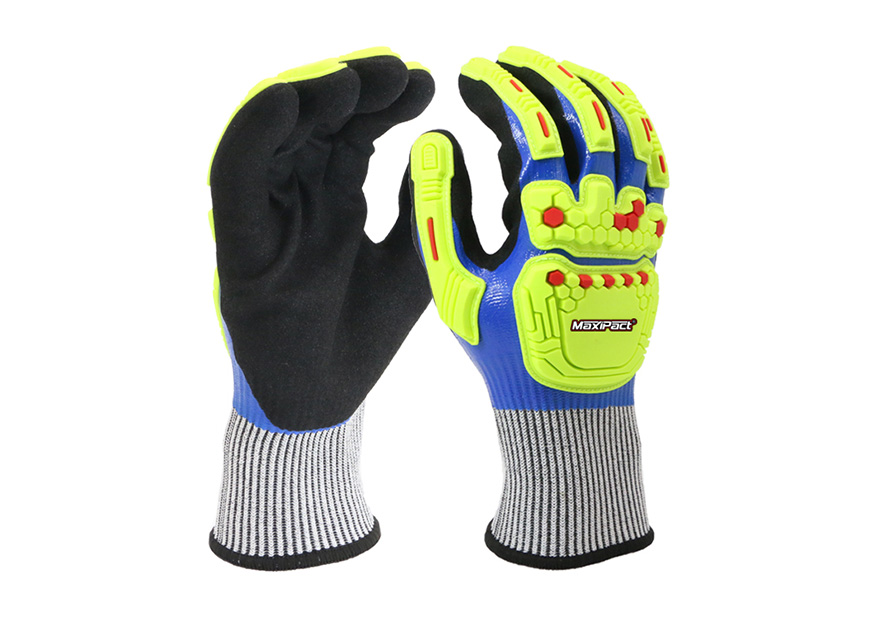
Dr. Emily Carter, a certified industrial hygienist and PPE consultant with 18 years of experience, explains: “The choice isn’t arbitrary. In a roadway construction zone with speeds above 45 mph, reflective stripes on gloves can mean the difference between a driver seeing a hand signal at 200 feet versus 80 feet. At those speeds, that 120-foot difference represents about 1.8 seconds of additional reaction time.”
Staying Visible and Productive in Wet Conditions
Moisture presents a dual challenge for high visibility gloves: water can diminish the reflective properties of certain materials, and wet gloves reduce worker productivity due to discomfort and grip loss. However, modern materials science has addressed many of these issues.
Rain Performance: High-quality fluorescent yarns retain their color even when wet—provided they are made from solution-dyed fibers, meaning the pigment is integrated directly into the fiber rather than a surface coating. Reflective materials are specially designed to remain effective in wet conditions, although heavy rain may reduce reflectivity by approximately 15-20%.
Choosing the Right High Visibility Work Gloves
Comfort and Productivity: Gloves that become waterlogged and heavy reduce finger dexterity and increase hand fatigue. The National Institute for Occupational Safety and Health (NIOSH) notes that workers wearing uncomfortable or poorly fitting PPE are 3.5 times more likely to remove it or work without proper protection. High visibility gloves designed with breathable back-of-hand materials and quick-drying liners help maintain productivity by wicking moisture away from the skin while keeping the fluorescent exterior intact.
Selecting the appropriate glove requires a systematic evaluation rather than a one-size-fits-all approach. The American Society of Safety Professionals (ASSP) recommends a three-step assessment process:
Step 1: Environmental Risk Assessment
Evaluate lighting conditions (daylight, dawn/dusk, nighttime), vehicle speeds, weather patterns, and whether work occurs near moving traffic. For roadway construction with night shifts, ANSI Class 2 or 3 garments are required, and gloves with reflective elements should be part of that ensemble.
Step 2: Task-Specific Hazard Analysis
Identify primary risks: cut hazards (sharp materials), impact hazards (falling objects or swinging tools), puncture hazards (rebar or nails), and chemical exposure.
Step 3: Visibility-Performance Trade-off
Determine whether full-hand visibility is necessary or if back-of-hand fluorescence combined with a standard palm provides sufficient conspicuity without sacrificing grip.
A case study of a large highway expansion project in Colorado illustrates this process: the safety team initially purchased inexpensive, ordinary yellow gloves. After three near misses where crane operators failed to see hand signals, they switched to ANSI-compliant fluorescent gloves. Within two months, operators reported a 70% improvement in hand signal visibility, and no further near misses occurred during the remaining 10 months of the project.
James Thompson, safety director at a mid-sized construction company in Texas, recalls a near-miss that completely changed his perspective. “One of our workers was directing rush hour traffic near a busy intersection. It was just past sunrise, and he was wearing standard orange safety gloves. A truck driver almost hit him before he saw his hands.” This incident prompted Thompson to replace all the gloves on the site with highly visible ones. “Within a month, our equipment operators reported they could see the hand signals from twice as far away.” For Thompson, the change wasn’t just about compliance—it was about ensuring he was clearly visible in those life-or-death moments.
Proper Sizing Protocol: Measure hand circumference at the knuckles (excluding thumb) and hand length from fingertip to base of palm. ANSI/ISEA 105-2016 provides standard sizing charts. Gloves should feel snug but not tight when making a fist; there should be no more than 1/4 inch (6.35mm) of excess material at any fingertip when fingers are fully extended.
Expert Insight – Mark Henderson, a certified ergonomist and consultant to five Fortune 500 construction firms: “I’ve seen companies spend thousands on high-spec cut-resistant gloves only to have workers cut the fingertips off because the fit was wrong.
Fit is not a comfort issue—it is a safety issue with direct productivity consequences.”
High visibility work gloves have evolved from simple colored hand coverings into sophisticated PPE that balances conspicuity, protection, and dexterity. For construction and road workers—populations that experience struck-by fatality rates higher than nearly any other occupational group—these gloves are not optional accessories but essential safety tools.