How Proper Gloves at Work Prevent Injuries and Boost Productivity
A Plant Manager’s Realization: The Overlooked Detail of Protection
As the operations manager of an automotive parts manufacturing plant, I used to believe our production line was safe enough. That changed last month when I stood on the shop floor and watched an assembly worker, his glove slipping while tightening a bolt, wrench his hand forcefully against a metal part. It wasn’t a “recordable incident” in our quarterly reports, but it caused a nearly one-hour drop in that operator’s productivity, and for the next few days, he subconsciously avoided using that hand for precision tasks. This observation made me realize that a pair of ill-fitting or performance-mismatched gloves carries a hidden cost far greater than we account for. It is not just a safety barrier; it is the critical interface connecting the worker, the tool, and production efficiency.
The First Line of Defense: How Scientific Protection Intercepts Major Hand Injuries
According to the U.S. Bureau of Labor Statistics, hand injuries account for over 15% of all nonfatal workplace injuries, the vast majority of which are preventable with proper protective equipment. A scientifically designed dipped glove systematically addresses common risks through its materials and construction:
Cut and Abrasion Resistance: In industries like metalworking or glass handling, sharp edges are a primary threat. Gloves meeting Cut Resistance levels (e.g., Level C) under the EN 388:2016 standard utilize a high-strength dipped coating (like nitrile or polyurethane) or embedded high-modulus fibers (like HPPE) on the palm to effectively disperse and resist cutting forces. As an OSHA expert notes, “For workers handling sheet metal or sharp components, choosing certified cut-resistant gloves is the most direct way to reduce severe laceration risks.”
Puncture and Impact Protection: In construction or scrap handling, nails and metal shards can cause deep punctures. The density of the dipped coating and any additional padding provide crucial buffering.
Chemical & Grease Slip Protection: In machining or chemical operations, oils and specific chemicals can irritate the skin or cause grip failure. Specialized chemical-resistant gloves (conforming to standards like EN 374) use their dipped layer to block permeation. Simultaneously, micro-textured palm designs maintain a stable coefficient of friction in greasy environments, preventing tools from slipping.
The Productivity Engine: How Fit and Function Drive Efficiency
Safety is the foundation, but productivity gains come from the glove’s fine-tuning of “ergonomics.” This goes beyond mere “dexterity while wearing gloves” to reducing energy expenditure in operations.
Reducing Fatigue, Extending Productive Time: Research supported by NIOSH indicates that using ill-fitting or overly stiff gloves for repetitive tasks can increase the load on hand muscles by 20-30%, significantly accelerating fatigue. A properly fitted dipped glove designed around the hand’s curvature, with sufficient elasticity and folding treatment at the joints, reduces the constant force the hand exerts against the glove itself. This delays the point of fatigue, helping maintain a steady work pace over longer periods.
Enhancing Grip and Control Precision: At the heart of productivity is precise control over tools and parts. The micro-pattern or textured coating on a glove’s palm is not arbitrary. These textures increase friction with smooth metal or plastic surfaces, allowing workers to achieve a secure grip with less force. On an assembly line, this translates to faster pick-and-place speeds and lower drop rates. For precision tasks, ultra-thin dipping technology provides basic protection with minimal compromise to tactile feedback.
Minimizing Disruptions and Changeovers: A single pair of gloves integrating abrasion, oil, and moderate cut resistance eliminates the downtime of workers changing gloves between different tasks. Furthermore, the confidence from reliable protection reduces hesitant movements born from fear of injury, leading to a more fluid workflow.
How to Choose: Translating Safety and Productivity Needs into Glove Specifications
Choosing the “right” glove is a technical process, moving from risk assessment to product matching. Consider this decision logic:
Identify the Core Hazard: The priority is identifying the primary risk in the task. Is it cutting from metal burrs? Secure grip in oily conditions? Or potential contact with chemicals? This determines the glove’s core performance metrics.
Oily Environments: It’s Not Just About “Slip Resistance,” But “Sustained Slip Resistance”
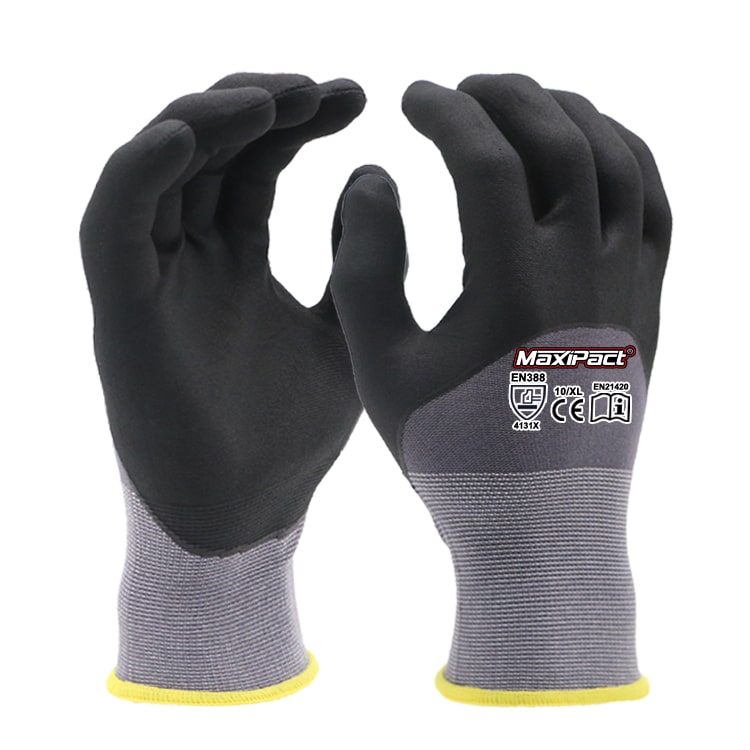
In oily environments, the most immediate risk is hand slippage, leading to dropped tools or a loss of grip. The 20-550 GREY foamed nitrile coating works by “absorbing” oil into its microscopic pores, keeping the glove’s surface dry; the 3/4 nitrile coating reduces the surface area available for oil film adhesion, thereby ensuring the gloves remain dry over extended periods.
Metal Cutting Environments: Cut Resistance is the Foundation; a Snug Fit is Critical
In scenarios involving metal cutting, deburring, sheet metal processing, and similar tasks, the primary risk is lacerations to the palms and fingers caused by sharp metal edges or burrs. However, many people overlook a more insidious risk: if gloves do not fit snugly, the “excess material” can actually get snagged or pulled into machinery or cutting tools.
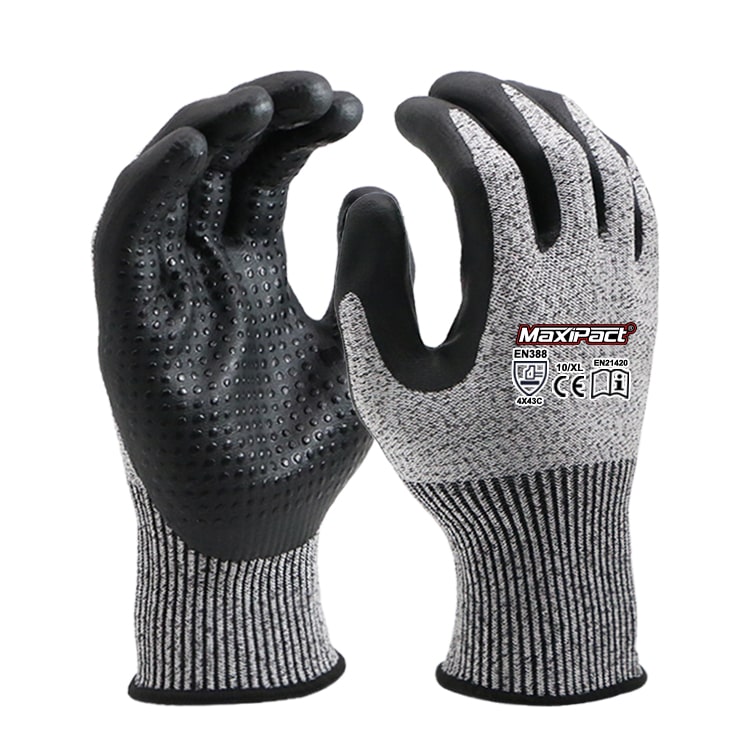
The 40-260 model features a highly elastic 13-gauge knitted liner combined with a foamed nitrile coating, ensuring unrestricted finger dexterity while preventing loose material from getting entangled.
Additional Note: Some operators opt for thicker gloves in the belief that they offer “greater safety.” However, in precision metalworking environments, overly thick gloves can actually diminish tactile sensitivity regarding tools and workpiece edges, thereby increasing the risk of accidental contact. When it comes to cut protection, a snug fit is far more important than mere thickness.
Handling Chemical Reagents: “Water Resistance” Is Not Enough; You Need Protection Against “Penetration”
Identifying risks in chemical environments presents the highest threshold of difficulty, largely because many people mistakenly use “water-resistant gloves” as if they were “chemical-resistant gloves.” This is a dangerous misconception. The fundamental distinction lies in the following:
Water Resistance: Prevents the passage of water molecules (which are relatively large).
Chemical Resistance: Prevents the passage of molecules from chemical reagents—such as organic solvents, acids, and bases—through the material layer (these molecules may be smaller and possess greater permeability).
Therefore, the selection logic for gloves intended for use with chemical reagents should be as follows:
Step 1: Identify the specific type of chemical involved (is it an oil, an acid, a base, or a mixed solvent?).
Step 2: Consult chemical permeation resistance data (e.g., permeation times specified in standards such as EN 374), rather than relying solely on generic “corrosion-resistant” descriptions.
Step 3: Select the appropriate material—such as Nitrile (resistant to oils and most solvents), Neoprene (resistant to acids and bases), or PVA (resistant to organic solvents but compromised by contact with water).
There is no such thing as a “universal chemical-resistant glove”; selection must be based on specific chemical safety data sheets, rather than on empirical judgment alone.
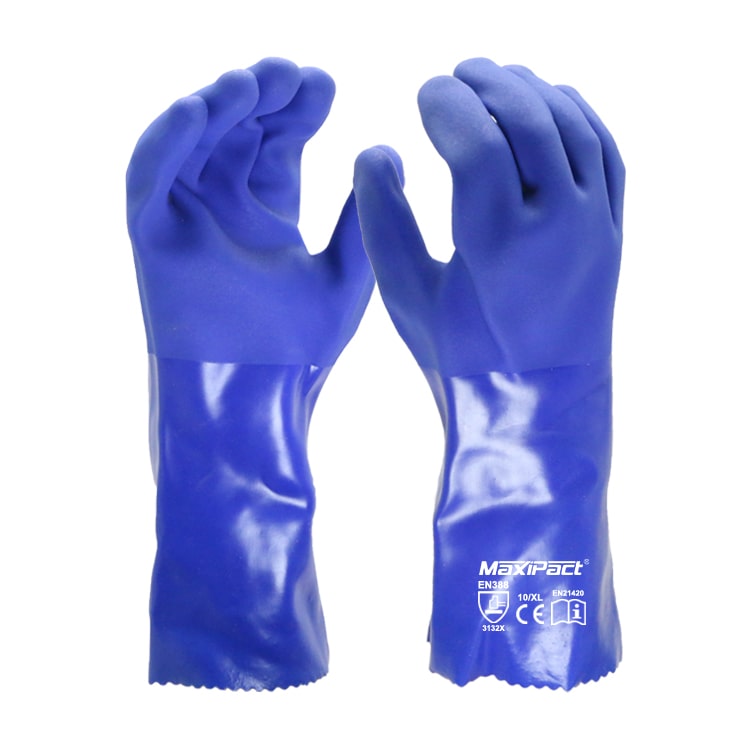
The 60-150 model offers excellent resistance to acids, bases, corrosives, greases, alcohols, and certain hydrocarbons. The palm features a textured finish that ensures a secure grip—even in wet or oily environments—effectively preventing tools from slipping.
Match Ergonomics to the Task: Assess the dexterity requirements. Fine electronics assembly demands ultra-thin, close-fitting gloves; heavy material handling requires thicker coatings and reinforced designs. Always measure using the brand’s precise sizing chart to ensure a perfect fit, with proper finger length and snug wrist closure.
Decode and Verify Standards: Rely on objective standards, not marketing claims. For general mechanical risks, the EN 388 standard provides specific performance levels for abrasion, cut, etc. Review the glove’s technical data sheet to understand its performance under defined test conditions.
Conduct Trials and Gather Feedback: Pilot gloves with a small team and gather direct feedback from workers on comfort, flexibility, and durability. A glove with excellent test data has zero safety or productivity value if workers find it uncomfortable or too cumbersome to wear consistently.
In conclusion, a proper work glove should be viewed as a high-efficiency production tool, not a passive consumable. It actively minimizes the probability of injury through risk management and, by optimizing the human-machine interface, reduces energy waste and time loss in operation, directly contributing to stable or even enhanced output. In the competitive manufacturing landscape, this professional attention to fundamental details is key to building long-term, robust operations. The core design philosophy behind professional brands like MaxGlove is to safeguard both safety and efficiency in every working moment.